

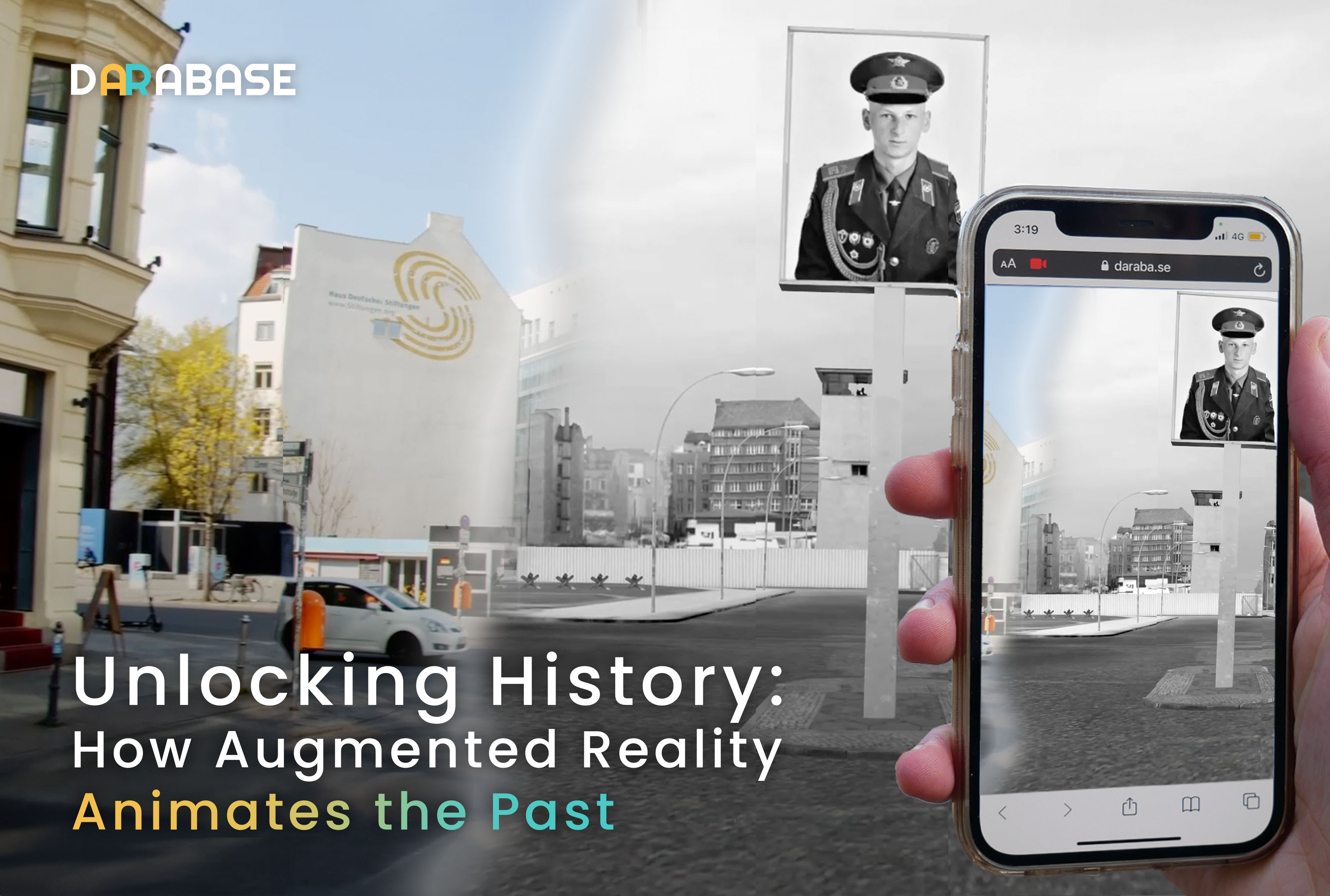

The concept of time travel has always fascinated us. Imagine being able to witness historical events firsthand, walk through ancient cities, or experience key moments in time. Books, films, and museums have long been our gateways to the past, but a revolutionary technology is changing the game – Augmented Reality (AR) – and it is making the past more immediate and more tangible than ever.
Location, location, AR location
Buildings and locations have long served as the main characters in historical education and tourism because they provide a visible bridge to the past which anchors us firmly in the historical context.
AR experiences can digitally augment locations to effectively transport individuals back in time. Digital images, video, audio and 3D models are overlaid on the location, to surround and interact with the viewer and bring to life the sounds and sights of the past. Viewers become first hand witnesses of the history of those sites.
AR breathes life into ancient ruins, and iconic monuments and landscapes, allowing viewers to immerse themselves in history. Such AR experiences also highlight the cultural significance of the locations and create a more tangible link to the past. Perhaps surprisingly, this technological revolution can foster a deeper understanding and appreciation of our history and the need to protect it.
AR – the immersive time machine
AR experiences are a powerful tool for education and tourism. AR augmented buildings serve as a bridge between the past and present, transporting viewers to different eras and allowing them to see the world as it once was.
One such example is Darabase’s AR Time Machine project, which brought historical sites like Checkpoint Charlie in Berlin to life. Virtual layers of historical imagery were overlaid onto real-world Berlin, so that users could witness the past of this infamous location, right in front of them.
In the Mayfair Walking Tour in London, AR was used to showcase the heritage of the neighbourhood. By overlaying archive images and videos onto present-day locations, users could learn about Mayfair’s fashionable past in an engaging and interactive way. Narrated by Kathryn Drysdale of Bridgerton fame, the experience became not just informative but also entertaining, driving footfall and igniting excitement for that location.
More recently, The Magnificent Mile have launched “AR-chitecture: Unlocking the Magnificent Mile’s Hidden Gems”, an innovative project combining cutting-edge AR technology with the rich history of the City of Chicago’s architectural landmarks, offering visitors an engaging journey through time. Users can layer information on top of The Tribune Tower and DuSable bridge to animate the past historical and architectural significance of the area. This is set to drive a large amount of footfall to the area in 2025.

What’s the future for the past?
The switch from GPS to VPS (visual positioning software) and advances in smart glass devices is making AR ever more accessible and immersive. Google’s Geospatial API is, for example, using device sensors and GPS data to detect the viewer’s environment accurately, allowing for precise placement of digital AR content that seamlessly integrates with the real world. As we begin the inevitable switch from mobiles to headsets, the need to actively lift up a phone to view AR content will disappear and the overlay of digital content onto our physical environment will be effortless and normalised.
The possibilities with AR are endless. Whether it’s exploring ancient ruins or walking through historical neighbourhoods, AR will engage us with our surroundings in ways we never thought possible. It will be commonplace to view the world in 3D – not just in the literal digital sense, but in the sense that the past (and of course the future) of a location will be as accessible and immersive as its present.
Conclusion
Augmented Reality is revolutionising tourism and education by offering immersive experiences that blend the past with the present. Projects like the Mayfair Walking Tour and MagMile’s new AR-Chitecture tour demonstrate how AR is a powerful medium for storytelling and learning and as the technology evolves further, the ubiquity and impact of AR will increase. The future of AR looks brighter than ever, so, grab your smartphone and get ready to embark on a journey through time. The adventure awaits!


One Comment