

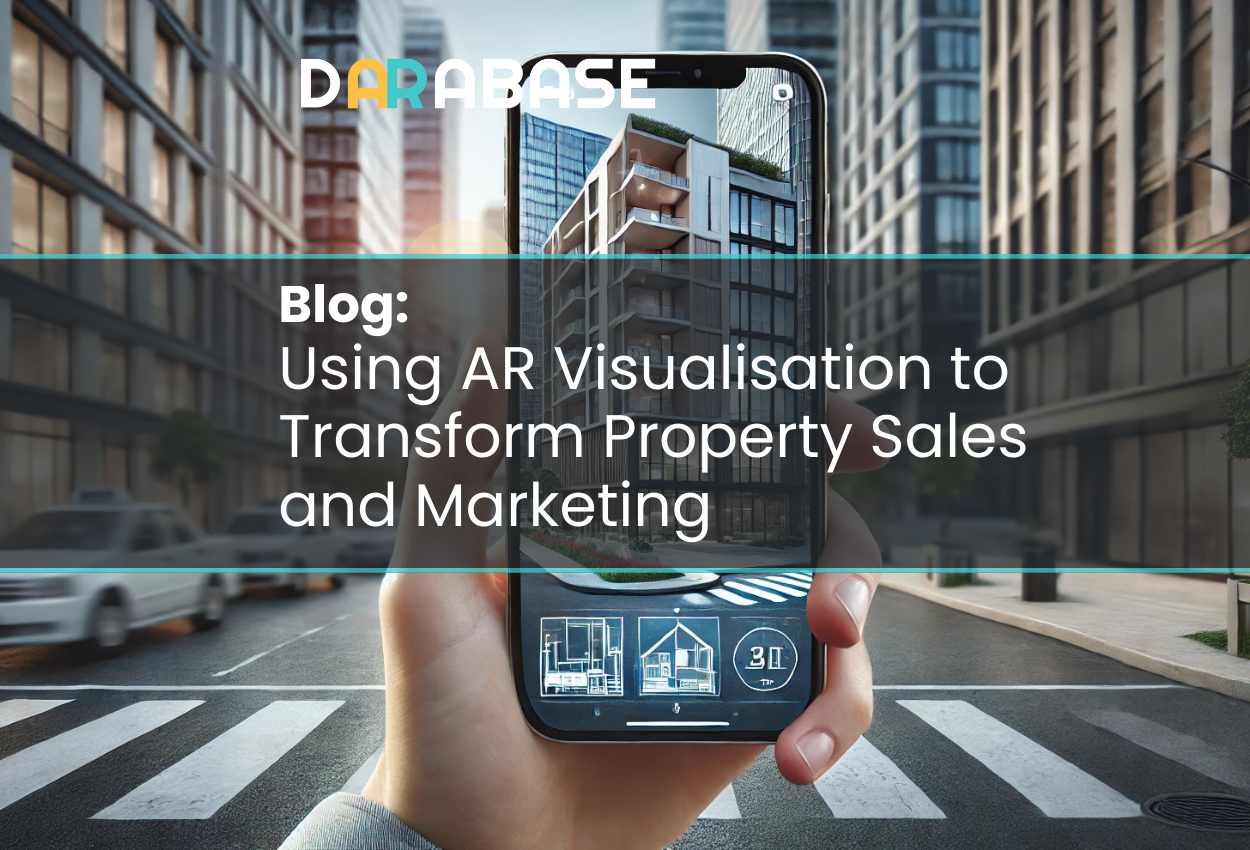

Embracing innovative technologies is key to staying ahead in today’s property market. Using Augmented Reality (AR) visualisation with 3D property models or existing Building Information Models (BIM) are powerful tools that revolutionise how property companies showcase their assets. A substantial 83% of real estate agents believe that using augmented reality can provide them with a competitive advantage in the market.
By combining the 3D immersive nature of AR with the data-rich capabilities of BIM, property sales and marketing strategies can achieve unparalleled levels of engagement and efficiency.
1. Enhancing Property Presentations with AR Visualisation.
For property companies, providing potential buyers with a comprehensive view of a property is essential. BIM, known for its detailed and precise 3D modelling, enables marketers to present accurate digital twins of a building. When paired with AR, these models can be projected into real-world settings, allowing clients to visualise how a property would look within at human scale and in a specific space in its completed state.
Use Cases:
- Interactive walkthroughs: Use AR to let potential buyers explore properties accurately in 3D before they are built.
- Detailed visual overlays: Highlight specific architectural and structural elements sourced from BIM data.
- Enhanced engagement: Allow clients to immerse themselves in a property, boosting interest and decision-making.

2. Creating Engaging Property Tours with AR
AR-enabled property tours elevate traditional presentations by allowing clients to interact with 3D property models in their intended environment. Unlike static brochures or videos, AR visualisation brings properties to life and provides a realistic sense of space and scale.
Use Cases:
- Virtual staging: Showcase different interior layouts and furniture arrangements.
- On-site previews: Project digital models onto a physical space, in the context of the city, to give clients a real-time visualisation of the property’s future state alongside existing buildings.
- Global guided tours: Enable prospective buyers to navigate through a property from anywhere in the world, with information pop-ups on key features and design details. Nearly half (45%) of real estate agents have reported a rise in interest from international clients when properties are showcased using AR.
- Easily Accessible: Unlike Virtual Reality (VR) experiences, AR can be accessed easily via a smartphone connected to the web or via an app.
3. Boosting Marketing Campaigns with Immersive Visualisation
Property marketing teams can leverage property models with AR visualisations to create more dynamic and compelling campaigns. This combination ensures marketing content is visually appealing, interactive, and informative, capturing potential buyers’ attention more effectively, earlier on in the process.
Use Cases:
- Interactive AR ads that convert: Create campaigns that let users visualise properties through their mobile devices. AR campaigns are said to lead to 403% more enquiries.
- AR-powered 3D demos: Embed BIM-based 3D models in marketing materials to convey detailed insights into a property’s design and structure, easily accessible via a mobile device.
- Live property showcases: Use AR during events to display the property’s scale and features interactively. This can be done for entire giga-projects, cities or developments.
- Reduce costs and boost ROI: The cost of staging properties can be reduced by up to 97% by using AR and some studies suggest ROI can be improved by a whopping 403%

4. Streamline Commercial Communication and Decision-Making
One of the significant challenges in property sales is bridging the communication gap between marketing, sales and potential buyers. By incorporating AR visualisation, stakeholders can visualise complex building details and interact with design elements in real-time. This transparency can accelerate decision-making processes, shorten sales cycles and reduce potential misunderstandings allowing for a better overall customer experience. This shared clarity accelerates marketing campaigns and facilitates better communication of the project’s vision internally and efficiently.
Future Proofing Your Sales and Marketing
Property companies that combine AR visualisation using 3D models in their marketing and sales workflows demonstrate their commitment to innovation and customer-centric experiences. This not only enhances client trust but also positions these companies as forward-thinking leaders in the real estate market.
From interactive property tours to AR-powered campaigns, this technology combination offers opportunities to engage potential buyers, shorten sales cycles and streamline communication. By embracing these tools, property companies can set themselves apart and harness the power of immersive tech to drive marketing results, sales and boost brand reputation. In a study by Zipdo, 81% of potential buyers appreciate having the option to explore 3D and virtual tours when looking for houses, thoroughly proving it is the future that clients want.
Ready to take your property marketing to the next level? Contact Darabase today to learn how our AR solutions can elevate your sales strategy and enhance client engagement.

