



Augmented reality (AR) is rapidly redefining urban experiences, offering opportunities for engagement, innovation, and convenience. The rise in smart glasses and wearable technology has now expedited the need for cities to be more aware of the significant challenges that can arise.
The potential for unregulated digital content underscores the urgency for proactive governance to protect citizens and maintain control over the digital canvas of urban life.
1. The Promise and Risks of an Augmented City
AR’s capacity to overlay digital content onto the physical world has the potential to revolutionise industries like tourism, education, retail, and public services. Imagine tourists navigating cities through immersive guides that highlight historical landmarks with interactive storytelling, such as the AR experience around Checkpoint Charlie in Berlin.
Public services, from transport systems to health care, can leverage AR to deliver real-time updates, improving efficiency and accessibility.
From a sustainability perspective, AR offers opportunities to reduce physical waste and resource consumption. By replacing traditional printed materials and energy hungry digital screens with virtual overlays, AR can minimise the need for paper maps, brochures, and signage. Smart cities can integrate AR with spatial mapping to optimise traffic flow, reduce emissions, and enhance urban planning. For instance, AR can be used to guide citizens to less congested areas, redistributing foot traffic, preventing over-crowding in some locations whilst reducing wear and tear on infrastructure. Additionally, the ability to visualise proposed developments or environmental impact through AR could lead to more informed, sustainable decision-making and community engagement.
However, this seamless integration also exposes cities to substantial risks.
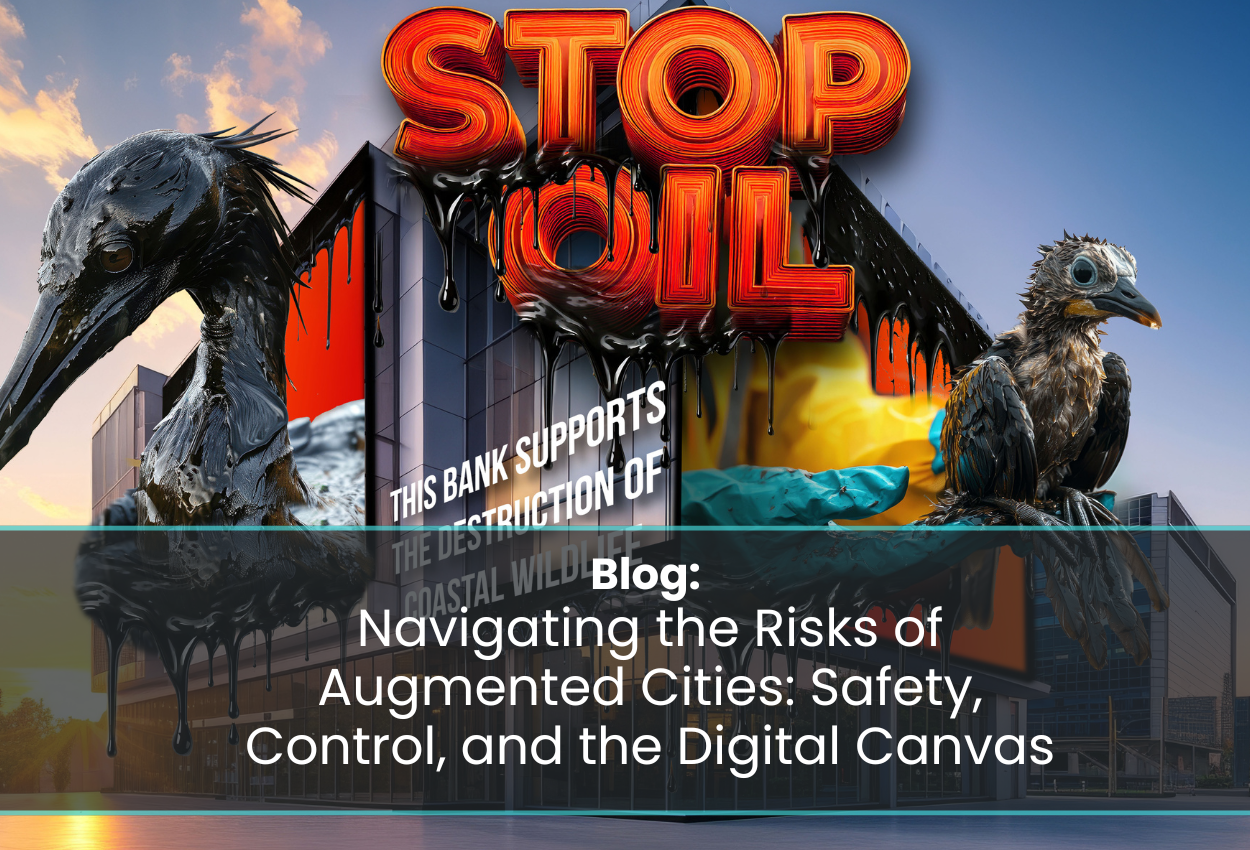
Unregulated digital environments pave the way for virtual graffiti and unsolicited AR content, creating significant challenges for cities and property owners. Virtual graffiti, which can manifest as unauthorised digital tags or disruptive animations overlaid on physical landmarks, has the potential to erode the cultural and aesthetic value of public spaces. Iconic monuments, heritage sites, and even private properties could become targets of inappropriate or offensive digital content, disrupting the public’s experience and potentially breaking the law.
This issue extends beyond aesthetics to include the infringement of private and communal spaces. For example, an unregulated digital ecosystem might allow brands or individuals to place digital advertisements or interactive elements on private buildings without the owner’s consent, creating a chaotic and cluttered digital landscape and infringing copyright law be “passing off” and creating an implied endorsement between the digital content and the property. In this example, BrewDog displayed CGI images of their Black Heart Stout beer on Twickenham Stadium, famously sponsored by Diageo’s Guinness brand, in an attempt to “go viral”. This guerilla tactic however ended up infringing the stadium’s Property Digital Rights by creating an implied endorsement between BrewDog’s beer, Twickenham Stadium and RFU’s Six Nations Rugby tournament.

These risks highlight the need for proactive governance and regulation to ensure that digital and AR content aligns with community standards and respects the integrity of both public and private spaces.
2. Governance in the AR Era: A Necessary Framework
Cities must adopt robust governance to mitigate AR risks while harnessing its transformative potential. Key recommendations include:
- Zoning for AR Content: Like regulations for physical signage, zoning can restrict commercial AR content in sensitive areas such as schools, hospitals, and religious sites.
- Safety Standards: Creating AR-free zones in high-risk areas like busy intersections or transport hubs can prevent accidents and ensure public safety.
These measures align with insights from Greg Lindsay’s The Augmented City report, which underscores the critical role of cities in shaping the integration of AR technologies into urban life. Without proper regulation, the urban realm risks becoming dominated by corporate interests and unchecked technological encroachment.
3. Collaborative Solutions for a Secure Digital Ecosystem
Addressing AR’s risks requires collaboration between governments, property owners, and technology providers. Cities can claim and control Property Digital Rights (PDRs) to manage how digital content appears on their assets and across the public realm. This approach not only safeguards public interests but also fosters innovation by enabling immersive experiences like public art installations and city-wide AR projects.
The rise of visual positioning systems (VPS) and spatial mapping technologies also highlights the importance of cities taking an active role in managing the digital ecosystem. These tools allow precise placement of AR content, creating opportunities for cities to engage citizens while maintaining control over digital layers in public spaces. There is great potential to engage citizens and the creator economy as our cities become digital playgrounds. There is also a great opportunity for cities to create much needed new and incremental revenue streams by controlling and monetising commercial content on their public spaces and properties.
Conclusion: Shaping a Safe, Smart AR Future
The risks associated with AR content are present, but they are manageable through proactive governance and collaboration. By establishing frameworks for safety, transparency, and accountability, cities can unlock AR’s potential to enhance urban life while protecting the integrity of shared spaces, creating new potential revenue streams in the process.
The journey toward an augmented urban future requires a delicate balance of innovation and regulation—one that places the public good at the forefront of technological progress.
📥 Download the Immersive Cities Manifesto to discover actionable strategies for navigating the risks of augmented reality and shaping a safer, smarter digital future.

