

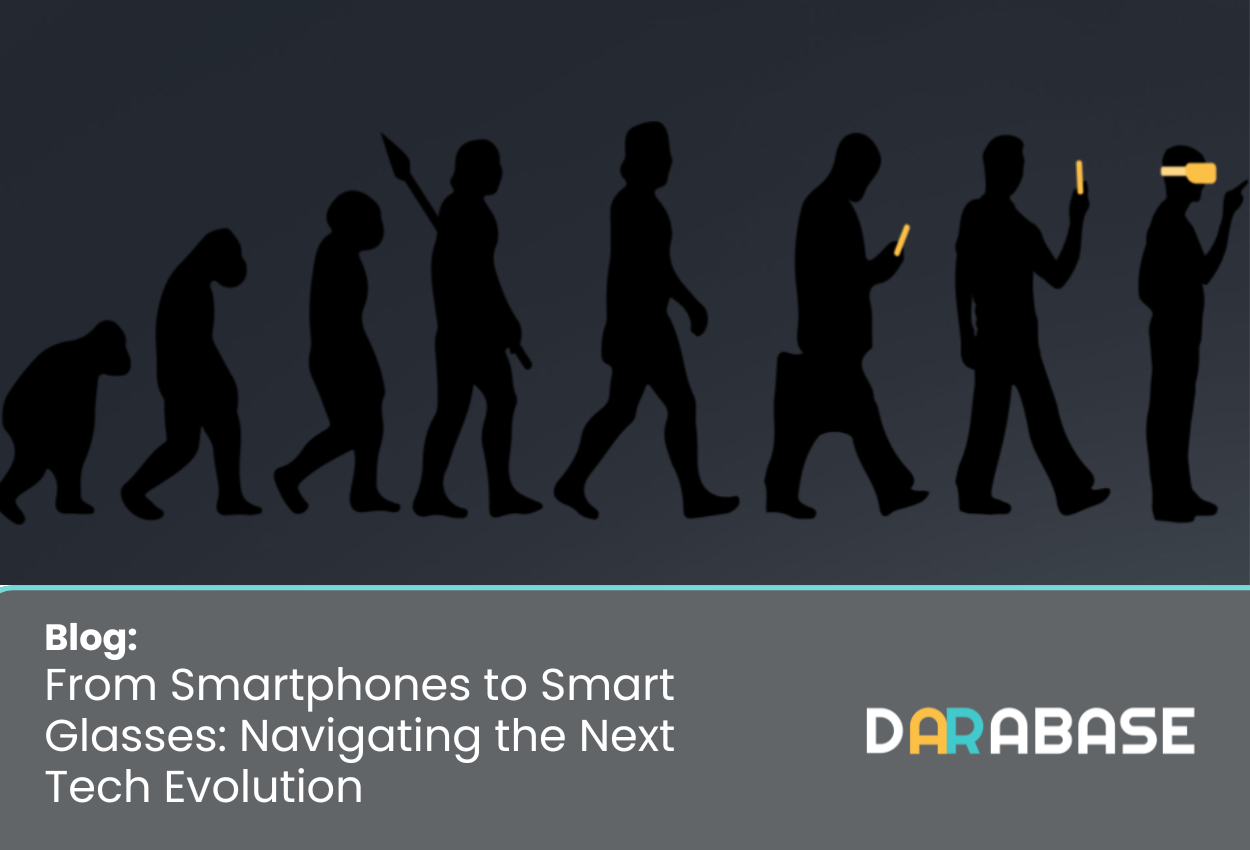

Technology has rapidly evolved, transforming how we interact with the world around us. From the days of print media to the shift toward mobile technology and now wearables, we’re witnessing a profound change in how we access and experience information and social interactions.
Breaking Free from the Desk
Initially, our digital experiences were tied to desktop computers, tethering us to our desks. It was a world of static content, where information was one-way, similar to print media. The shift to mobile phones offered a more dynamic and interactive experience, allowing us to take technology with us and engage with it anytime, anywhere.
Even this shift, which seems like an age ago to many, was remarkable to witness at the time, but wasn’t without its sceptics. Every major technological shift has faced its share of scepticism. In the early 1990s, renowned economist Paul Krugman famously claimed, “By 2005 or so, it will become clear that the Internet’s impact on the economy has been no greater than the fax machine’s.” This quote serves as a reminder that transformative technologies often start with doubt, but eventually, they become ingrained in our everyday lives. The same journey is unfolding for wearables, as they gradually shift from novelty to necessity, proving their value in how we interact with the world. As Steve Jobs said, “You can’t connect the dots looking forward; you can only connect them looking backwards.”

From Wired to Wearable: The Connectivity Revolution
Connectivity has been a driving force in the evolution of computing, advancing from wired Ethernet connections to today’s wireless 5G, 6G, and edge computing technologies. Ethernet laid the foundation for PC connectivity in the 1970s, allowing data transfer over local networks, while the arrival of Wi-Fi in the 1990s introduced wireless networking, enabling mobility and broader access. Mobile connectivity advanced with 3G and 4G, facilitating the rise of smartphones and mobile apps. Today, 5G supports ultra-fast, low-latency connections crucial for the Internet of Things (IoT), while 6G and edge computing promise to further blur the lines between physical and digital worlds, offering real-time, personalised experiences through wearables and smart devices. This ongoing evolution is making computing more ubiquitous and seamlessly integrated into our daily lives.
The Rise of Mobile and the Spatial Web
Smartphones fundamentally changed how we interact with technology, introducing a more dynamic and portable way to engage with digital content. They gave birth to the concept of having a digital camera in our pocket, enabling the growth of social content, selfies and augmented reality (AR) experiences, where digital elements could be overlaid onto our physical surroundings. This shift wasn’t just about convenience; it marked the beginning of a transition from flat, two-dimensional screens to more spatial, interactive communications and information.
AR applications have become more prevalent, with apps like IKEA Place enabling users to visualise furniture in their homes, Google Live View providing AR-enhanced navigation, and platforms like Snapchat and Instagram incorporating AR filters and lenses that allow users to augment their photos and videos in creative ways. These examples illustrate the growing role of AR in blending digital elements with our physical surroundings, marking the beginning of a transition from flat, two-dimensional screens to more spatial, interactive communications and information. This period set the stage for the next technological leap: smart glasses and wearable devices. As Mark Zuckerberg recently stated that glasses were a “glimpse into the future” with the aim of “… trying to build a future that is more open, more accessible, more natural, and more about human connection.” His words reflect the growing belief that wearables will become the primary way we experience digital content in a more immersive and intuitive manner.

Wearables: The Next Frontier
Wearable technology, such as Snap’s Spectacles and Meta’s Orion glasses, is unlocking a new realm of possibilities for AR experiences. These devices offer a hands-free, more natural way to interact with the digital world, moving beyond the limitations of holding up a phone or being tied to a screen. They represent a significant step toward a future where digital content becomes an integral part of our everyday lives. AI and computer vision are critical to this transition, enabling wearables to understand and interact with their environment in real time. By analysing visual data and making instant decisions, these technologies enhance the accuracy, fluidity, and responsiveness of AR experiences, allowing digital content to seamlessly blend into the physical world.
Evan Spiegel, CEO of Snap Inc., captures this vision: “We’re so convinced that AR glasses are the path forward… Glasses are a way to use computing that actually brings us together and keeps us connected with the real world” With Snap’s Spectacles, users can record, share, and engage with their surroundings in ways that were previously unimaginable. Meta’s Orion glasses are set to push the boundaries even further, offering an experience that integrates digital elements into our daily routines seamlessly.

Smart glasses enable a more fluid interaction with digital content. They provide a spatial web experience, where information, entertainment, and social interactions are layered onto the real world, adapting to our environment as we move through it. This evolution signifies that technology is no longer something we look at; it’s something we experience. Find out more about AR in the age of experience here.
The Immersive Future
As the smart glasses revolution continues to unfold, it aligns perfectly with Darabase’s vision of an immersive future. We see cities evolving into vast digital canvases, where public spaces, buildings, and landmarks become platforms for interactive storytelling and commerce. Through wearables, people will engage with AR experiences that enrich their understanding of the environment, whether it’s through tourist trails, digital art installations, or even location-based advertising.
Dominic Collins, CEO of Darabase, summarises this evolution: “Wearables are not just another tech trend; they represent the next chapter in how we connect with our surroundings. Our cities are evolving into digital playgrounds, offering endless opportunities for creativity, engagement, and commercialisation. The potential is limitless, and we are only just beginning to see how this technology will reshape our urban experiences.”

Darabase is at the forefront of this transformation, helping cities and their citizens, property owners and navigate the exciting possibilities that AR and wearable technology bring. As we move from being tethered to screens to experiencing a world enriched by digital layers, the potential for immersive storytelling, community engagement, and new revenue streams is immense. The journey from print to pixels has brought us to this moment, where technology and reality are no longer separate but intertwined in ways that will redefine how we live, work, and play.
To find out more about how Darabase can help you join the immersive future, get in touch with our team.

